
MIL-STD-810 Power Supplies and Transformers
Selecting environmentally rugged power supplies and magnetics for temperature, altitude, humidity, vibration, and shock

Electrical performance is only half of a military power supply. The other half is whether it survives the environment: the heat and cold of the platform, the thin air at altitude, driving rain and salt fog, blown sand and dust, and the vibration and shock of the vehicle, aircraft, or ship it rides in. A design that meets every electrical spec on the bench is still a failure if it cracks a solder joint on a vibration table or condenses moisture inside the enclosure.
MIL-STD-810 is the environmental engineering standard for defense materiel. It defines a tailorable set of laboratory test methods that simulate the conditions equipment sees across its life cycle, from manufacturing and transport through storage and operational use. The current revision is MIL-STD-810H (2019, with Change 1 in 2022).
MIL-STD-810 is deliberately tailored. There is no single pass or fail and no blanket 810 rating. Equipment is tested to the specific methods and procedures that match the platform environment, at levels drawn from the platform life-cycle environmental profile. This page explains the MIL-STD-810 methods that matter for power conversion and magnetics, how each one maps to the hardware, and which Abbott products are built for them.
What MIL-STD-810 Asks of Your Power Supply
MIL-STD-810 turns the operating environment into design requirements. For power conversion and magnetics, that touches nearly every part of the mechanical and thermal design:
| Design area | Why it matters |
|---|---|
| Thermal design and derating | High and low temperature and altitude methods drive component derating, the cooling path, and the choice of wide-temperature parts. A supply that runs cool in a lab can overheat in a sealed bay at altitude. |
| Sealing and ingress protection | Rain, humidity, salt fog, sand, dust, and immersion methods drive the enclosure sealing, gaskets, and connector selection. This is where a sealed IP65 or IP67 unit separates from an open-frame one. |
| Vibration and shock construction | Vibration, shock, and acceleration methods drive ruggedized construction, board staking, mounting, and the potting or encapsulation of magnetics so nothing fatigues or shifts. |
| Materials and corrosion | Salt fog, humidity, and fungus methods drive material finishes, platings, conformal coating, and corrosion-resistant hardware. |
| Combined environments | Real platforms apply temperature, vibration, altitude, and humidity together. Margin has to hold under the combination, not just each method alone. |
| Tailoring and evidence | The methods, procedures, and levels come from the platform environmental profile. The tested configuration and levels must match what the program invokes and what is delivered. |
The practical takeaway: MIL-STD-810 makes the enclosure, the thermal path, and the internal construction part of the specification, not just the circuit.
The MIL-STD-810 Methods That Apply to Power Conversion
MIL-STD-810H defines more than two dozen test methods. The ones below are the methods that most often apply to power supplies, transformer rectifier units, and magnetics, with what each simulates and what handles it in a rugged Abbott unit.
| Method | What it simulates | What handles it in the hardware |
|---|---|---|
| 500.6 Low Pressure (Altitude) | Reduced convective cooling and reduced dielectric strength at altitude | Conduction cooling, component derating, spacing and insulation |
| 501.7 High Temperature | Hot operating and storage environments | Thermal path, derated components, wide-temperature parts |
| 502.7 Low Temperature | Cold operation, cold start, and cold storage | Wide-temperature parts and cold-start margin |
| 503.7 Temperature Shock | Rapid transition between temperature extremes | Materials and construction that tolerate thermal cycling |
| 506.6 Rain | Wind-driven and blowing rain | Sealed enclosure (IP65/IP67), gasketed interfaces, sealed connectors |
| 507.6 Humidity | Warm, damp, and condensing environments | Sealed construction, conformal coating, corrosion-resistant finishes |
| 509.7 Salt Fog | Corrosive marine and coastal atmosphere | Sealed enclosure, corrosion-resistant materials and platings |
| 510.7 Sand and Dust | Blowing sand and fine dust | Sealed enclosure and gasketed interfaces |
| 512.6 Immersion | Submersion in water | Fully sealed (IP67) construction |
| 513.8 Acceleration | Sustained g-loading in flight and launch | Robust internal support, staking, potted and encapsulated magnetics |
| 514.8 Vibration | Random and sinusoidal vibration in service | Ruggedized construction, secure mounting, potted and encapsulated magnetics |
| 516.8 Shock | Functional, crash-hazard, and bench-handling shock | Ruggedized construction, board staking, potted magnetics |
Selection note: there is no blanket “MIL-STD-810 compliant.” Equipment is tested to specific methods and procedures at levels drawn from the platform life-cycle environmental profile, so the same product can be qualified to very different levels on different programs. Specify the methods, procedures, and levels your platform requires, not just “meets 810,” so the design and the evidence match the requirement.
Why a complete rugged unit, not a bare module: a bare converter board has no sealed enclosure to pass the rain, humidity, salt fog, and immersion methods, no controlled thermal path for the temperature and altitude methods, and no ruggedized construction for the vibration and shock methods. A complete Abbott unit is designed as an environmental package: a sealed or conduction-cooled enclosure, derated and wide-temperature parts, ruggedized internal construction, conformal-coated circuit boards as standard, and potted or encapsulated magnetics. Abbott magnetics carry that ruggedness inherently, since MIL-PRF-27 grade defines the sealing and construction and class defines the maximum operating temperature.
Abbott Power Products for MIL-STD-810 Applications
Because MIL-STD-810 is about survival in the environment, it spans Abbott’s whole line: sealed and rugged AC-DC supplies, the LDC200 DC-DC converter, the TR400 transformer rectifier unit, and MIL-PRF-27 transformers and inductors. Match your environment, power level, and packaging to the appropriate architecture below.
| Series | Type | Environmental construction | Best for | |
|---|---|---|---|---|
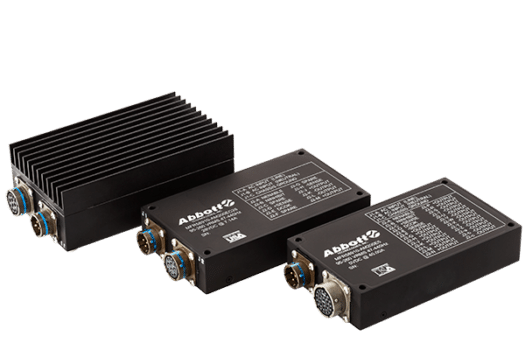 |
AM200 | 200 W AC-DC | Sealed, conduction-cooled, MS3470 connectors; environmental trims to IP67 | Sealed airborne and multi-domain electronics facing rain, humidity, salt fog, dust, vibration, and shock |
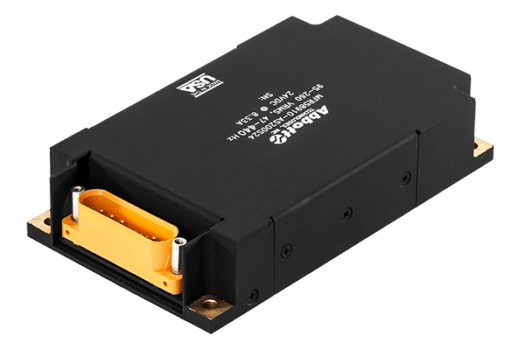 |
AS200 | 200 W AC-DC | Standard conduction-cooled, conformal-coated package; not fully sealed to IP67 | Rugged 200 W applications where full sealing is not required but temperature, vibration, and shock are |
 |
CM500 | 500 W AC-DC | Sealed, conduction-cooled, MS3470 connectors; environmental trims to IP67; designed to meet MIL-STD-810 | Sealed 500 W power in harsh airborne, ground, and shipboard environments |
 |
CS500 | 500 W AC-DC | Standard conduction-cooled, conformal-coated package, parallelable; not fully sealed to IP67 | Higher-power rugged rails where packaging and current sharing matter |
 |
CM1000 | 1000 W AC-DC | Sealed construction with environmental trims to IP67, for power-dense installations | Power-dense sealed applications in harsh environments at 1000 W |
 |
LDC200 | 200 W DC-DC | Sealed 28 Vdc converter; designed to meet MIL-STD-810 and MIL-STD-461 | 28 Vdc bus conversion for sensitive electronics in rugged installations |
 |
TR400 | Transformer rectifier unit | Transformer-based construction; designed to meet MIL-STD-810 | Three-phase 400 Hz bulk DC in harsh airborne and ground environments |
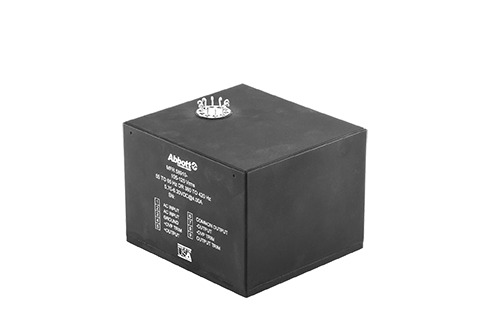 |
LPS | Linear AC-DC | Rugged linear construction; low-noise | Low-noise rugged rails and form-fit-function replacement |
 |
MIL-PRF-27 transformers & inductors | Magnetics | Potted or encapsulated; MIL-PRF-27 grade sets sealing and construction, class sets maximum operating temperature | Inherently rugged magnetics for high-temperature, vibration, and shock environments |
Environmental trim options: the sealed AM and CM families offer environmental trims to match the invoked methods: S (standard), E (EMI enhanced), EC (EMI enhanced for condensing environments), and M (fully sealed to IP67). The rugged AS and CS families come in a standard conformal-coated package that is not fully sealed to IP67. Selecting the trim to the MIL-STD-810 water, humidity, and salt fog methods your platform invokes, together with any MIL-STD-461 EMI requirement, is part of the selection.
On MIL-STD-810 levels: Abbott sealed and rugged products are designed and built to withstand MIL-STD-810 environments, and the specific methods, procedures, and levels are set per model and application. Sealed families (IP65/IP67) address the water, humidity, salt fog, and dust methods; conduction-cooled construction and component derating address the temperature and altitude methods; ruggedized construction and potted magnetics address vibration and shock. Confirm the required methods and qualification levels for your platform so we can match a standard, modified, or custom unit to them.
Getting the Selection Right
The hard part of MIL-STD-810 is rarely one method. It is defining the real environment and making the thermal path, the sealing, and the construction hold together under the combination.
- Specify methods and levels, not “meets 810.” Because 810 is tailored, a product qualified to one program’s levels may not meet another’s. Define the methods, procedures, and levels from your platform profile first.
- Start from the environment, then the electrical spec. Sealing, cooling method, and mounting are often the deciding factors between a standard and a modified unit, so resolve them early.
- Design the thermal path for the worst case. The temperature and altitude methods interact. Verify performance at worst-case ambient, altitude, mounting orientation, and load together, not separately.
- Match sealing to the water and particulate methods. Rain, humidity, salt fog, sand, dust, and immersion drive the IP rating, gaskets, and connectors. Pick the sealing level from the methods invoked.
- Treat magnetics as environmental parts. For transformers and inductors, MIL-PRF-27 grade and class already encode sealing, construction, and maximum operating temperature. See the MIL-PRF-27 guide.
- Plan for combined environments. Vibration at temperature, or humidity followed by cold, is harder than either alone. Make sure the margin covers the combination the platform actually applies.
Selection Checklist
Define these items before you commit to a power supply for a MIL-STD-810 application:
| Requirement | What to define |
|---|---|
| Invoked standard | MIL-STD-810 revision, the specific methods and procedures, and any program-specific tailoring. |
| Temperature and altitude | Operating and storage temperature range, thermal-shock requirement, and maximum operating altitude. |
| Water and particulate | Rain, humidity, salt fog, sand and dust, and immersion methods, and the required ingress-protection level. |
| Vibration and shock | Vibration profile (random or sine), shock levels, acceleration, and any pyroshock or ballistic-shock requirement. |
| Cooling method | Conduction, baseplate, cold plate, forced air, or natural convection, and the available heat-sink interface. |
| Sealing and connectors | Ingress-protection target, gasketing, and connector series and sealing. |
| Mounting and orientation | Mounting method, orientation, and installation constraints for vibration and shock. |
| Electrical requirements | Input power type and the output rails, since the environmental package still has to house a supply that meets the electrical spec. |
| Combined environments | Any combined temperature, vibration, altitude, or humidity requirement the platform applies together. |
| Evidence package | Qualification report, analysis, similarity, or the test configuration and levels the program requires. |
| Lifecycle support | Configuration control, obsolescence planning, and long-term availability of the environment-critical parts. |
Integrating the Supply
A MIL-STD-810-qualified power supply still depends on the installation to hold its environmental margin:
- Provide the cooling path the unit was designed for: a flat, clean conduction interface or the specified airflow, verified at worst-case ambient and altitude.
- Mount the unit per its vibration and shock qualification, using the specified hardware, torque, and orientation.
- Maintain the sealing: use the specified connectors, backshells, and gaskets, and do not defeat the ingress protection during installation.
- Keep dissimilar-metal and corrosion practice consistent with the salt fog and humidity requirements.
- Match the delivered configuration to the configuration used in environmental qualification.
The goal is to make the qualification configuration look like the installed configuration.
How Abbott Supports Your MIL-STD-810 Requirement
Abbott builds power conversion hardware and magnetics for programs where environmental survivability, electrical performance, configuration control, and lifecycle support all matter. Across sealed and rugged AC-DC supplies, the LDC200 DC-DC converter, the TR400 transformer rectifier unit, and MIL-PRF-27 transformers and inductors, the environmental package is designed in, not added on.
Because we design our own power electronics and magnetics and maintain a large library of custom and modified designs, we can start from a proven rugged baseline and tailor the sealing, cooling, mounting, and construction to your platform environment, which lowers both risk and schedule compared with a clean-sheet design. We maintain full configuration control and support customers from consultation and prototyping through production and legacy sustainment. Abbott is AS9100 and ISO 9001 certified, and does not obsolete products without full consideration. MIL-STD-810 covers the environment; for input power see our MIL-STD-704, MIL-STD-1399, and MIL-STD-1275 guides, and for EMI see our MIL-STD-461 guide.
Send us the invoked MIL-STD-810 methods and levels, the platform environment, the input power type, output rails, cooling and mounting constraints, and required evidence package. Our application engineers will match a standard, modified, or custom power solution to your environment. Contact us or complete the power supply design form.