
MIL-STD-167 Power Supplies and Transformers
Selecting power supplies and transformers that endure shipboard vibration
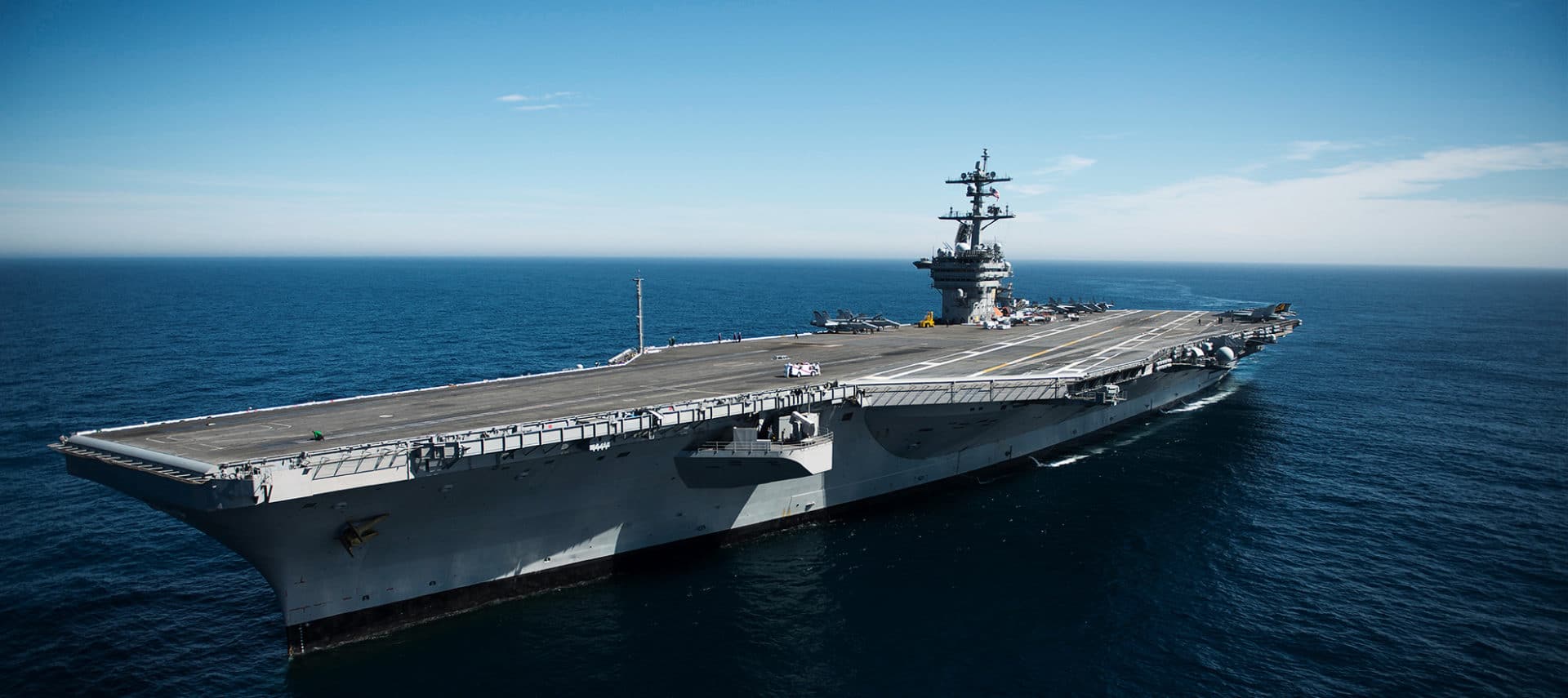
A ship vibrates continuously. The propeller shaft, the machinery, and the sea itself drive a steady structure-borne vibration into every rack and bulkhead, hour after hour, for the life of the platform. For a power supply or transformer, that is a fatigue problem: leads work-harden and crack, heavy magnetics loosen, and anything with a resonance in the wrong frequency band eventually fails. Surviving it is a matter of mechanical design, not electrical rating.
MIL-STD-167-1 is the U.S. Navy standard for the mechanical vibration environment of shipboard equipment. Type I covers environmental vibration, the ship’s structure-borne vibration the equipment must endure and keep operating through, and Type II covers internally excited vibration, the balancing limits for rotating machinery an equipment item may contain. For power conversion hardware, Type I is the requirement that matters. The current revision is MIL-STD-167-1A (2005), which split the original combined MIL-STD-167 into the mechanical (-1) and internally excited (-2) documents.
MIL-STD-167 is one of the core shipboard qualification standards, alongside MIL-STD-1399 for the electrical power interface and MIL-DTL-901 for high-impact shock. Vibration and shock are complementary survivability requirements: MIL-STD-167 is the continuous, everyday vibration environment, and MIL-DTL-901 is the single, high-impact event. This page explains what MIL-STD-167 asks of a power supply and which Abbott products are qualified for shipboard vibration.
What MIL-STD-167 Asks of Your Power Supply
Continuous vibration is a fatigue and resonance requirement. It drives how the enclosure, the boards, and the heavy parts inside are designed and held:
| Design area | Why it matters |
|---|---|
| Resonance avoidance | A structural resonance inside the test band amplifies the vibration and concentrates fatigue. The chassis, boards, and internal structure are designed so response prominences fall outside, or are damped within, the frequency range. |
| Heavy-part mounting | Transformers, inductors, and large capacitors are the parts most likely to loosen or fatigue their leads under sustained vibration. Potting, staking, and brackets keep them anchored. |
| Board and lead support | Circuit boards and harnesses need support and strain relief so repeated flexing does not crack solder joints, traces, or leads over thousands of hours. |
| Connector retention | Connectors and fasteners must stay seated and torqued under vibration, with locking features where required. |
| Operate through the test | The equipment must perform its principal functions during and after the vibration test, so electrical margin has to hold while the structure is being shaken. |
| Configuration and mounting | Vibration qualification is tied to the mounting and orientation tested. The delivered unit and its installation must match the qualified configuration. |
The practical takeaway: vibration survival comes from resonance control and solid mechanical support, engineered into the whole assembly from the start.
The MIL-STD-167-1 Type I Vibration Test
Type I environmental vibration is a sinusoidal test run separately in each of the three principal axes. It runs in three phases: an exploratory sweep to find the equipment’s resonances, a variable-frequency test at the full amplitudes, and an endurance dwell at the worst resonance. The test amplitudes are defined as vibratory displacement, so the acceleration rises with frequency across the band.
| Test phase | What it does | Condition |
|---|---|---|
| Exploratory vibration | Sweeps the band to locate resonances (response prominences) | 4 to 33 Hz, 1 Hz steps, 0.010 in single amplitude |
| Variable-frequency | Applies the full test amplitudes to expose effects not seen in the sweep | 4 to 33 Hz, 1 Hz steps, 5 minutes each, at the Table I amplitudes below |
| Endurance | Dwells at the resonance that most affects function or structure | At least 2 hours at the worst resonance (split per Table II if several) |
The variable-frequency and endurance amplitudes come from Table I of the standard, given as single (zero-to-peak) vibratory displacement:
| Frequency range | Vibratory displacement (single amplitude) |
|---|---|
| 4 to 15 Hz | 0.030 in (about 0.76 mm), ±0.006 in |
| 16 to 25 Hz | 0.020 in (about 0.51 mm), ±0.004 in |
| 26 to 33 Hz | 0.010 in (about 0.25 mm), ±0.002 in |
Selection note: the values above are the standard Type I schedule (MIL-STD-167-1A) for equipment on conventionally shafted, propeller-driven ships. Mast-mounted equipment is tested to higher low-frequency amplitudes (up to 0.100 in from 4 to 10 Hz), and high-speed, waterjet, or podded platforms can fall outside this schedule. Type II (internally excited vibration) is a separate balancing requirement for rotating machinery, in MIL-STD-167-2, and is not usually invoked for static power conversion hardware. Confirm the type, the ship class, and the applicable frequency range for your program.
Why vibration survival is designed in: a repackaged commercial supply will pass a brief bench check and then fatigue to failure in shipboard service, because nothing controlled its resonances or supported its heavy parts. Surviving MIL-STD-167, and continuing to operate through it, comes from a resonance-managed chassis, potted or staked magnetics and capacitors, supported boards, strain-relieved leads, and retained connectors. A complete Abbott unit is built as a vibration-qualified assembly, and Abbott magnetics help inherently because potted and encapsulated construction holds the windings and core solid against sustained vibration.
Abbott Power Products for MIL-STD-167 Applications
Abbott’s shipboard-oriented power supplies and magnetics are built for the continuous vibration environment, with resonance control and mechanical support designed in. Match your power type, power level, and packaging to the appropriate architecture below.
| Series | Type | Vibration qualification and construction | Best for | |
|---|---|---|---|---|
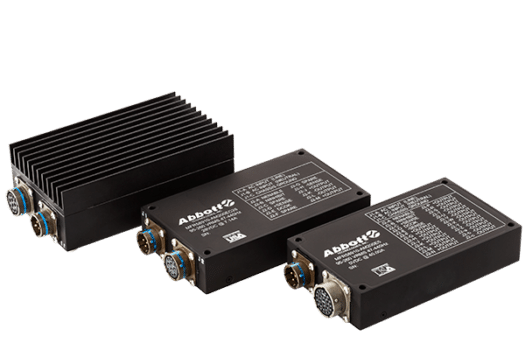 |
AM200 | 200 W AC-DC | Sealed, ruggedized construction; qualified to MIL-STD-167 Type I vibration and MIL-S-901 shock | Sealed shipboard electronics needing vibration, shock, and environmental survivability |
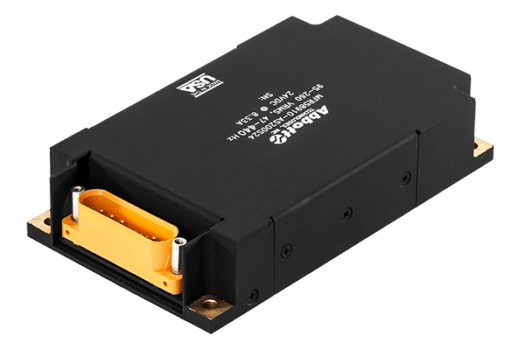 |
AS200 | 200 W AC-DC | Rugged construction; qualified to MIL-STD-167 Type I vibration and MIL-S-901 shock | Rugged 200 W shipboard power where full sealing is not required |
 |
CM500 | 500 W AC-DC | Sealed, ruggedized construction; qualified to MIL-STD-167 Type I vibration and MIL-S-901 shock | Sealed 500 W shipboard power in harsh environments |
 |
CS500 | 500 W AC-DC | Rugged construction, parallelable; qualified to MIL-STD-167 Type I vibration and MIL-S-901 shock | Higher-power rugged shipboard rails with current sharing |
 |
CM1000 | 1000 W AC-DC | Sealed, ruggedized construction for the shipboard vibration environment | Power-dense sealed shipboard applications at 1000 W |
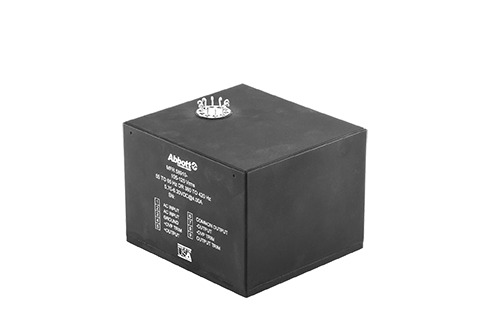 |
LPS | Linear AC-DC | Encapsulated, ruggedized linear construction for the shipboard vibration environment; low-noise | Low-noise shipboard rails and form-fit-function legacy replacement |
 |
MIL-PRF-27 transformers & inductors | Magnetics | Potted or encapsulated construction, inherently vibration-robust; built to the applicable vibration requirement for shipboard equipment | Rugged magnetics inside vibration-qualified shipboard assemblies |
On qualification and other products: Abbott datasheets cite MIL-STD-167 Type 1 vibration for the shipboard AC-DC families, alongside MIL-S-901 shock and MIL-STD-1399 shipboard power. Confirm the type, ship class, and frequency range your program invokes. For shipboard bulk DC, Abbott also builds transformer rectifier units for the shipboard environment; see the MIL-STD-1399 guide. Where a requirement exceeds the standard products, Abbott qualifies or adapts a design from its custom library to the required vibration schedule.
Getting the Selection Right
The hard part of MIL-STD-167 is rarely the electrical design. It is keeping the structure out of trouble across thousands of hours of continuous vibration.
- Manage resonances, do not just survive amplitude. A response prominence inside the 4 to 33 Hz band is what drives fatigue failures. Resonance control in the chassis and boards is the core of a MIL-STD-167 design.
- Confirm the type and ship class. Type I environmental vibration is the usual requirement; the frequency range and amplitudes depend on the platform, and mast-mounted or special ships differ from the standard schedule.
- Support the heavy parts. Potting, staking, and bracketing of transformers, inductors, and capacitors is what prevents lead fatigue and loosening. This is where a purpose-built shipboard design separates from a repackaged commercial one.
- Treat the mounting as part of the qualification. A unit qualified hard mounted or on a specific isolation mount is only qualified for that configuration. Confirm the mounting and orientation.
- Pair vibration with shock. MIL-STD-167 is the continuous environment; MIL-DTL-901 is the single high-impact event. Shipboard equipment usually invokes both, and they are engineered together.
- Keep the qualified configuration fixed. Changes to the chassis, boards, mounting, or internal support can shift resonances and invalidate vibration evidence. Maintain configuration control on the vibration-critical details.
Selection Checklist
Define these items before you commit to a power supply for a MIL-STD-167 application:
| Requirement | What to define |
|---|---|
| Invoked standard | MIL-STD-167 revision and type (Type I environmental, or Type II internally excited), and any program-specific tailoring. |
| Ship class and frequency range | The platform and applicable frequency band, including whether the standard 4 to 33 Hz schedule or a mast-mounted or special-ship schedule applies. |
| Mounting | Hard mounted or isolation mounted, the mount type, and the orientation as installed. |
| Operability requirement | Which functions must be maintained during and after the vibration test. |
| Shock | The companion MIL-DTL-901 shock grade and category for the platform. |
| Electrical requirements | Input power type and output rails, which must hold through the vibration test. |
| Environmental | Sealing, temperature, and humidity for the shipboard environment, commonly per MIL-STD-810. |
| Evidence package | Vibration qualification report, analysis, similarity, or the test configuration the program requires. |
| Lifecycle support | Configuration control on vibration-critical details, obsolescence planning, and long-term availability. |
Integrating the Supply
A vibration-qualified power supply only holds its qualification if it is installed the way it was tested:
- Mount the unit on the qualified mounting scheme, hard mounted or on the qualified isolation mounts, using the specified hardware, torque, and orientation.
- Provide a stiff mounting surface so the unit sees the intended vibration and not an amplified local resonance.
- Support and clamp cables so harnesses and connectors are not fatigued by continuous motion.
- Use locking or retained fasteners and connectors where the installation calls for them.
- Keep the delivered chassis, mounting, and internal support identical to the vibration-qualified configuration.
The goal is to make the installed configuration match the configuration that was vibration-qualified.
How Abbott Supports Your MIL-STD-167 Requirement
Abbott builds power conversion hardware and magnetics for shipboard programs where vibration endurance, shock survivability, electrical performance, configuration control, and lifecycle support all matter. Our sealed and rugged AC-DC supplies, linear supplies, and MIL-PRF-27 magnetics are built for the shipboard vibration and shock environment, with resonance control and mechanical support designed into the chassis, mounting, and internal structure.
Because we design our own power electronics and magnetics and maintain a large library of custom and modified designs, we can start from a proven vibration-qualified baseline and tailor the outputs, packaging, and mounting to your platform, which lowers both risk and schedule compared with a clean-sheet design. We maintain full configuration control on the vibration-critical details and support customers from consultation and prototyping through production and legacy sustainment. Abbott is AS9100 and ISO 9001 certified, and does not obsolete products without full consideration. MIL-STD-167 covers continuous vibration; for shipboard power see our MIL-STD-1399 guide, for high-impact shock see our MIL-DTL-901 guide, and for the environment see our MIL-STD-810 guide.
Send us the invoked MIL-STD-167 type and ship class, the frequency range, the companion shock requirement, the input power and output rails, and required evidence package. Our application engineers will identify a standard or qualified custom power solution for your shipboard vibration requirement. Contact us or complete the power supply design form.