
MIL-DTL-901 Power Supplies
Selecting power supplies and magnetics that survive shipboard high-impact shock

When a weapon detonates in the water near a warship, the hull transmits a violent mechanical shock into every piece of equipment on board. Machinery that keeps the ship fighting has to ride through that event without breaking loose, cracking, or shutting down. For a power supply or transformer, that is a far more severe mechanical requirement than ordinary vibration, and it is designed in from the first bracket, not added later.
MIL-DTL-901, formerly MIL-S-901, is the NAVSEA detail specification for high-impact mechanical shock qualification of shipboard machinery, equipment, and systems on surface ships and submarines. It verifies that equipment survives, and where required keeps operating through, the severe transient shock of underwater explosions and combat events. The current revision is MIL-DTL-901E (2017), which superseded MIL-S-901D.
MIL-DTL-901 is one of the core shipboard qualification standards, alongside MIL-STD-1399 for the electrical power interface and MIL-STD-167 for continuous vibration. Where MIL-STD-167 is the steady vibration the ship produces underway, MIL-DTL-901 is the single, brutal, high-impact event. This page explains what MIL-DTL-901 asks of a power supply and which Abbott products are qualified for shipboard shock.
What MIL-DTL-901 Asks of Your Power Supply
High-impact shock is a mechanical survival requirement. It drives the chassis, the mounting, and the way every heavy part inside is held in place:
| Design area | Why it matters |
|---|---|
| Chassis and mounting | The enclosure and its mounting feet carry the full shock load into and out of the unit. Foundation stiffness, fastener selection, and mounting geometry decide whether the unit stays attached and intact. |
| Heavy-part retention | Transformers, inductors, and large capacitors are the heaviest parts inside a supply. Potting, staking, brackets, and clamps keep them from tearing free or fatiguing their leads under shock. |
| Board and lead support | Circuit boards, harnesses, and connectors need strain relief and support so nothing flexes, unseats, or fractures during the impact. |
| Grade A continued operation | Mission and safety-critical equipment must keep operating during and after the shock, not just survive it. That drives margin into the electrical and mechanical design together. |
| No loose parts or hazards | Even Grade B equipment must not shed parts or become a hazard to nearby Grade A equipment. Covers, hardware, and internal assemblies all have to stay captured. |
| Configuration and evidence | Shock qualification is tied to the mounting orientation, foundation, and installed configuration tested. The delivered unit and its mounting must match what was qualified. |
The practical takeaway: shock survival is a property of the whole assembly and its installation, so it has to be engineered into the mechanical design from the start.
How MIL-DTL-901 Classifies the Requirement
MIL-DTL-901 does not apply one test to everything. The requirement is set by the grade the equipment must meet and the test category that matches its weight and mounting. The pieces that matter for a power supply:
| Parameter | Options | What it means |
|---|---|---|
| Grade | Grade A or Grade B | Grade A must remain fully operational during and after the shock (mission and safety critical). Grade B must not become a hazard or impair Grade A equipment, but need not keep operating. |
| Shock test category (by weight) | Lightweight, medium weight, or heavyweight | Lightweight equipment (under about 250 lb) is tested on the lightweight shock machine by hammer blow; medium-weight equipment on the medium-weight shock machine; heavyweight equipment on the floating shock platform (barge test). |
| Platform | Surface ship or submarine | The platform and the mounting location set the shock severity, with submarine requirements generally the most severe. |
| Mounting and orientation | Per installed configuration | The mounting method, orientation, and blow sequence follow how the equipment is actually installed, so the mounting is part of the qualification. |
Selection note: a MIL-DTL-901 requirement is only meaningful with its grade and test category. Confirm whether the equipment is Grade A (operate through) or Grade B (survive without hazard), whether it falls in the lightweight, medium, or heavyweight test category, and the platform. Most power supplies and magnetics fall in the lightweight category and are typically Grade A. Note the designation lineage as well: units qualified in the field commonly cite MIL-S-901, which is the same NAVSEA specification now at revision MIL-DTL-901E.
MIL-DTL-901 shock versus MIL-STD-810 shock: these are not the same test at different levels. MIL-STD-810 functional shock applies a defined acceleration pulse, on the order of tens of g for a few milliseconds (a nominal 40 g, 11 ms pulse is typical). MIL-DTL-901 instead sets the severity by the apparatus that reproduces an underwater explosion: lightweight equipment is struck by a heavy hammer on the lightweight shock machine at defined blow heights, and heavier equipment is shocked on a floating platform by an underwater charge. The peak accelerations that result are far higher and far shorter in duration than an MIL-STD-810 functional-shock pulse, which is why shipboard shock qualification is a distinct and more demanding requirement. The exact levels come from the MIL-DTL-901E procedure and depend on the equipment weight, mounting, and location.
Why shock survival cannot be added later: a bare converter board or an unbraced transformer will not survive a high-impact shock event no matter how well it regulates. Surviving MIL-DTL-901, and for Grade A continuing to operate through it, comes from a ruggedized chassis, a stiff mounting scheme, potted or staked magnetics and capacitors, supported boards, and strain-relieved leads. A complete Abbott unit is built as a shock-qualified assembly. Abbott magnetics help here inherently, because potted and encapsulated construction holds the windings and core solid against shock.
Abbott Power Products for MIL-DTL-901 Applications
Most of Abbott’s shipboard-oriented power supplies and magnetics are built for and qualified to MIL-S-901 lightweight high-impact shock. Match your power type, power level, and packaging to the appropriate architecture below.
| Series | Type | Shock qualification and construction | Best for | |
|---|---|---|---|---|
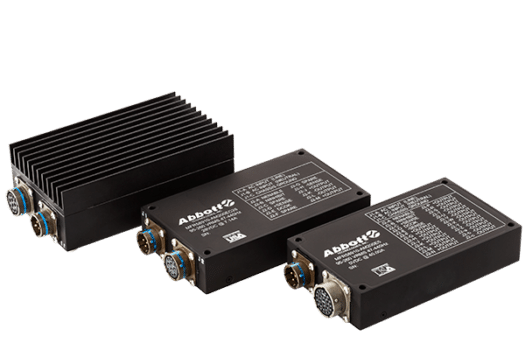 |
AM200 | 200 W AC-DC | Sealed, ruggedized construction; MIL-S-901 lightweight shock and MIL-STD-167 vibration | Sealed shipboard electronics needing shock, vibration, and environmental survivability |
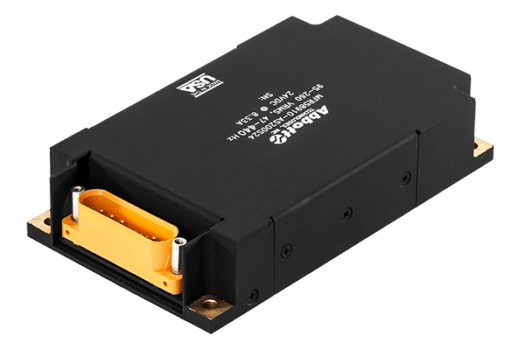 |
AS200 | 200 W AC-DC | Rugged construction; MIL-S-901 lightweight shock and MIL-STD-167 vibration | Rugged 200 W shipboard power where full sealing is not required |
 |
CM500 | 500 W AC-DC | Sealed, ruggedized construction; MIL-S-901 lightweight shock and MIL-STD-167 vibration | Sealed 500 W shipboard power in harsh environments |
 |
CS500 | 500 W AC-DC | Rugged construction, parallelable; MIL-S-901 lightweight shock and MIL-STD-167 vibration | Higher-power rugged shipboard rails with current sharing |
 |
CM1000 | 1000 W AC-DC | Sealed, ruggedized construction; MIL-S-901 lightweight shock | Power-dense sealed shipboard applications at 1000 W |
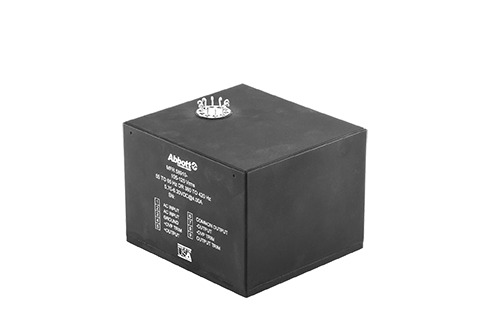 |
LPS | Linear AC-DC | Encapsulated, ruggedized linear construction; MIL-S-901 shock; low-noise | Low-noise shipboard rails and form-fit-function legacy replacement |
 |
MIL-PRF-27 transformers & inductors | Magnetics | Potted or encapsulated construction, inherently shock-robust; built to the applicable shock requirement for shipboard equipment | Rugged magnetics inside shock-qualified shipboard assemblies |
On designations and other products: Abbott datasheets cite MIL-S-901 lightweight, which is the field designation for the same NAVSEA specification now issued as MIL-DTL-901E. Confirm the grade, test category, and platform your program invokes. For shipboard bulk DC, Abbott also builds transformer rectifier units for the shipboard environment; see the MIL-STD-1399 guide. Where a requirement exceeds the standard products, Abbott qualifies or adapts a design from its custom library to the required shock grade and category.
Getting the Selection Right
The hard part of MIL-DTL-901 is rarely the electrical design. It is the mechanical survival of the whole assembly and its mounting under a single severe event.
- Confirm the grade first. Grade A (operate through and after) is a much harder requirement than Grade B (survive without hazard). Define it before anything else, because it drives margin into the entire design.
- Match the test category to the weight and mounting. Most power supplies and magnetics are lightweight and tested on the lightweight shock machine, but the mounting and platform set the severity. Confirm them early.
- Treat the mounting as part of the qualification. Shock reaches the unit through its foundation and fasteners. A unit qualified on one mounting scheme is not automatically qualified on another.
- Support the heavy parts. Potting, staking, and bracketing of transformers, inductors, and capacitors is what keeps a supply intact. This is where a purpose-built shipboard design separates from a repackaged commercial one.
- Pair shock with vibration. MIL-DTL-901 is the single high-impact event; MIL-STD-167 is the continuous vibration. Shipboard equipment usually invokes both, and they are engineered together.
- Keep the qualified configuration fixed. Changes to the chassis, mounting, or internal support can invalidate shock evidence. Maintain configuration control on the shock-critical details.
Selection Checklist
Define these items before you commit to a power supply for a MIL-DTL-901 application:
| Requirement | What to define |
|---|---|
| Invoked standard | MIL-DTL-901 revision (or MIL-S-901 as cited), and any program-specific tailoring. |
| Grade | Grade A (operate through and after) or Grade B (survive without hazard). |
| Test category | Lightweight, medium weight, or heavyweight, based on the equipment weight and mounting. |
| Platform | Surface ship or submarine, and the mounting location, which set the shock severity. |
| Mounting and foundation | Mounting method, orientation, foundation stiffness, and fastener scheme. |
| Vibration | The companion MIL-STD-167 vibration requirement for the platform. |
| Electrical requirements | Input power type and output rails, since a Grade A unit must keep meeting them through the event. |
| Environmental | Sealing, temperature, and humidity for the shipboard environment, commonly per MIL-STD-810. |
| Evidence package | Shock qualification report, analysis, similarity, or the test configuration the program requires. |
| Lifecycle support | Configuration control on shock-critical details, obsolescence planning, and long-term availability. |
Integrating the Supply
A shock-qualified power supply only holds its qualification if it is installed the way it was tested:
- Mount the unit on the qualified foundation and mounting scheme, using the specified hardware, torque, and orientation.
- Provide a stiff foundation; a flexible or under-built mounting changes the shock the unit actually sees.
- Do not add unsupported mass, brackets, or cabling that can swing or load the unit during shock.
- Route and clamp harnesses so connectors and leads are not stressed by the impact.
- Keep the delivered chassis, mounting, and internal support identical to the shock-qualified configuration.
The goal is to make the installed configuration match the configuration that was shock-qualified.
How Abbott Supports Your MIL-DTL-901 Requirement
Abbott builds power conversion hardware and magnetics for shipboard programs where shock survivability, vibration, electrical performance, configuration control, and lifecycle support all matter. Our sealed and rugged AC-DC supplies, linear supplies, and MIL-PRF-27 magnetics are built for the shipboard shock and vibration environment, with the mechanical survival designed into the chassis, mounting, and internal support.
Because we design our own power electronics and magnetics and maintain a large library of custom and modified designs, we can start from a proven shock-qualified baseline and tailor the outputs, packaging, and mounting to your platform, which lowers both risk and schedule compared with a clean-sheet design. We maintain full configuration control on the shock-critical details and support customers from consultation and prototyping through production and legacy sustainment. Abbott is AS9100 and ISO 9001 certified, and does not obsolete products without full consideration. MIL-DTL-901 covers high-impact shock; for shipboard power see our MIL-STD-1399 guide, for shipboard vibration see our MIL-STD-167 guide, and for the environment see our MIL-STD-810 guide.
Send us the invoked MIL-DTL-901 grade, test category, and platform, the companion vibration requirement, the input power and output rails, and required evidence package. Our application engineers will identify a standard or qualified custom power solution for your shipboard shock requirement. Contact us or complete the power supply design form.