
RTCA DO-160 Power Supplies
Selecting DC-DC converters for airborne equipment environmental, power, and EMC qualification
Airborne equipment has to prove it can take the environment, accept the aircraft power, and coexist electromagnetically with everything around it. On civil and dual civil-military platforms, one document defines that whole envelope: RTCA DO-160. A power supply going into that path is qualified section by section, and the power supply is usually one of the first things the environmental and EMC sections stress.
RTCA DO-160, Environmental Conditions and Test Procedures for Airborne Equipment, is the civil-aviation qualification standard maintained by RTCA and published jointly with EUROCAE as ED-14. It bundles into one standard what the military world splits across several: the environmental methods, the aircraft power-input conditions, and the electromagnetic emission and susceptibility requirements. The current published revision is DO-160G (2010). A revision H is in preparation and anticipated, but DO-160G remains the referenced revision today.
Like MIL-STD-810, DO-160 is tailored. Each section carries category letters that set the severity, and equipment is qualified to a specific set of sections and categories, recorded on the environmental qualification form at the front of the standard. There is no single blanket DO-160 rating. This page explains the DO-160 sections that matter for power conversion, how they map to the MIL standards, and which Abbott products serve them.
What DO-160 Asks of Your Power Supply
DO-160 touches the power supply on three fronts at once: the environment it survives, the aircraft power it accepts, and the electromagnetic energy it emits and withstands.
| Design area | Why it matters |
|---|---|
| Environmental survival | Temperature, altitude, temperature variation, humidity, vibration, and shock sections drive the thermal path, derating, sealing, and ruggedized construction, just as MIL-STD-810 does. |
| Aircraft power input | Section 16 defines the DC and AC input voltage, frequency, transient, and interruption conditions the supply must accept, the DO-160 analog of MIL-STD-704. |
| Voltage spikes and lightning | Voltage spike and lightning-induced transient sections drive input transient suppression and clamping, in parallel with the EMI design. |
| Conducted and radiated EMI | The emission and susceptibility sections drive the input EMI filter, shielding, and bonding, the same design levers as MIL-STD-461. |
| Categories and tailoring | Each section has categories that set severity by installation zone. The design and the evidence must match the categories the program invokes, not just “DO-160.” |
| Qualification evidence | Results are recorded section by section on the environmental qualification form. The tested configuration must match what is delivered. |
The DO-160 Sections That Apply to Power Conversion
DO-160G has 26 sections. The ones below are the sections that most affect a power supply, with what each covers and the MIL standard it lines up with. If your program invokes both DO-160 and the MIL standards, the mapping shows where one qualification effort can inform the other.
| Section | What it covers | MIL-STD counterpart |
|---|---|---|
| 4 Temperature and Altitude | Operating and storage temperature, altitude, and decompression | MIL-STD-810 500/501/502 |
| 5 Temperature Variation | Rate of temperature change | MIL-STD-810 503 |
| 6 Humidity | Warm, damp, and condensing exposure | MIL-STD-810 507 |
| 7 Operational Shocks and Crash Safety | Functional and crash-safety shock | MIL-STD-810 516 |
| 8 Vibration | Random and sinusoidal vibration | MIL-STD-810 514 |
| 10 Waterproofness | Condensation, spray, and water exposure | MIL-STD-810 506/512 |
| 14 Salt Fog | Corrosive salt atmosphere | MIL-STD-810 509 |
| 15 Magnetic Effect | The unit’s own magnetic field | MIL-STD-461 RE101 |
| 16 Power Input | DC and AC input voltage, frequency, transients, and interruptions | MIL-STD-704 |
| 17 Voltage Spike | High-voltage spikes on the power input | MIL-STD-461 / MIL-STD-704 transients |
| 18 Audio-Frequency Conducted Susceptibility | Audio-frequency ripple injected on the power leads | MIL-STD-461 CS101 |
| 19 Induced Signal Susceptibility | Coupling onto interconnecting wiring | MIL-STD-461 CS114 family |
| 20 Radio-Frequency Susceptibility | Conducted and radiated RF immunity | MIL-STD-461 CS114 / RS103 |
| 21 Emission of Radio-Frequency Energy | Conducted and radiated emissions | MIL-STD-461 CE102 / RE102 |
| 22 Lightning-Induced Transient Susceptibility | Indirect lightning transients on cables and power leads | MIL-STD-461 CS117 |
| 25 Electrostatic Discharge | ESD to the equipment | MIL-STD-461 CS118 |
Selection note: there is no blanket “DO-160 compliant.” Equipment is qualified to a specific set of sections and category letters that match its installation zone, recorded on the DO-160 environmental qualification form. Specify the sections and categories your program invokes, and the revision (DO-160 revisions D through G differ), so the design and the evidence match the requirement.
DO-160 and the MIL standards: DO-160 packages into one document what the military regime splits across MIL-STD-704 (aircraft power input), MIL-STD-461 (EMI), and MIL-STD-810 (environment). On dual civil-military airborne programs you may see both regimes. Because the underlying physics is the same, a supply engineered for one set of requirements is often a sound baseline for the other, though the qualification evidence is documented separately.
Abbott Power for DO-160 Applications
Abbott’s standard DO-160-qualified products are the PSA line of compact aircraft DC-DC converters. For requirements beyond those units, including later DO-160 revisions and other configurations, Abbott builds or adapts a design from its custom power supply library.
| Series | Input | Output | Qualification and construction | Best for | |
|---|---|---|---|---|---|
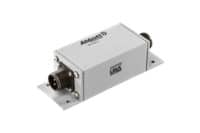 |
PSA-1 | 28 Vdc, 18-40 Vdc continuous; meets MIL-STD-704 | Adjustable 0-5 Vdc, up to 11.5 A; isolated | Qualified to RTCA DO-160C; 1.4 lb | Compact isolated DC-DC on the 28 Vdc aircraft bus |
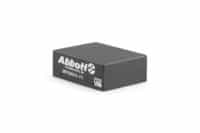 |
PSA-2 | 28 Vdc, 18-40 Vdc continuous; meets MIL-STD-704F | 5 Vdc, 1 A; isolated | Qualified to RTCA DO-160C; fully encapsulated, shielded metal case; 0.4 lb | Compact isolated aircraft or ground-vehicle DC-DC |
| — | Custom and modified PS assemblies | Per requirement | Per requirement | Qualified or adapted to the required DO-160 sections, categories, and revision through DO-160G | Programs invoking current DO-160 revisions or configurations the PSA units do not cover |
On revisions and other Abbott products: the PSA units are qualified to RTCA DO-160C. If your program invokes a later revision (DO-160D through G) or a section set the PSA units do not cover, Abbott qualifies or adapts a design from the library to match. Abbott’s other airborne supplies, including the AC-DC switchers and the LDC200 DC-DC converter, are designed and qualified to the MIL-STD regime (704, 461, 810) rather than DO-160; if your airborne program follows the military path, start there.
Getting the Selection Right
The hard part of DO-160 is rarely a single section. It is defining the section-and-category set for the installation and matching the design and evidence to it.
- Specify sections, categories, and revision, not “meets DO-160.” Because DO-160 is tailored, the category letters and revision determine the real requirement. Define them from the installation zone first.
- Confirm the revision. The PSA units are qualified to DO-160C. If the program invokes DO-160D through G, plan for qualification or adaptation to that revision.
- Treat Section 16 like an input-power spec. The power-input categories set the voltage, transient, and interruption behavior the supply must ride through, the same way MIL-STD-704 does.
- Engineer the EMI and spike sections together. Sections 17 through 22 share the input filter, shielding, and transient protection with the environmental design. Resolve them as one package.
- Reuse qualification across regimes where you can. If both DO-160 and the MIL standards apply, a common design baseline reduces effort even though the evidence is documented separately.
- Use a proven design as the baseline. Adapting an existing qualified design to your sections, categories, and revision is lower risk than starting from a blank sheet.
Selection Checklist
Define these items before you commit to a power supply for a DO-160 application:
| Requirement | What to define |
|---|---|
| Invoked standard | DO-160 revision (D through G), the sections invoked, and any program-specific tailoring. |
| Category letters | The category for each invoked section, since categories set the severity by installation zone. |
| Power input | Section 16 category, DC or AC input, voltage and frequency range, transients, and interruptions. |
| Spike and lightning | Section 17 voltage spike and Section 22 lightning-induced transient categories. |
| EMI | Sections 18 through 21 conducted and radiated emission and susceptibility categories. |
| Temperature and altitude | Section 4 categories, operating and storage temperature, and maximum altitude. |
| Vibration and shock | Section 7 and Section 8 categories for the platform. |
| Water and corrosion | Sections 6, 10, and 14 as invoked, and the required sealing. |
| Output rails | Voltage, current, regulation, ripple and noise, isolation, and sequencing. |
| Evidence package | The environmental qualification form, test reports, analysis, or similarity the program requires. |
| Lifecycle support | Configuration control, obsolescence planning, and long-term availability. |
How Abbott Supports Your DO-160 Requirement
Abbott builds power conversion hardware for airborne programs where environmental survivability, aircraft power compatibility, electromagnetic compatibility, configuration control, and lifecycle support all matter. The PSA line provides compact, isolated, DO-160-qualified DC-DC conversion on the 28 Vdc aircraft bus, and our custom power supply library lets us qualify or adapt a design to the specific DO-160 sections, categories, and revision a program invokes.
Because we design our own power electronics and maintain a large library of custom and modified power supply designs, we can start from a proven baseline and tailor the input, outputs, environmental package, and EMI design to your airborne application, which lowers both risk and schedule compared with a clean-sheet design. We maintain full configuration control and support customers from consultation and prototyping through production and legacy sustainment. Abbott is AS9100 and ISO 9001 certified, and does not obsolete products without full consideration. DO-160 bundles the airborne environment, power, and EMI; for the MIL-STD path see our MIL-STD-704, MIL-STD-461, and MIL-STD-810 guides.
Send us the invoked DO-160 revision, sections, and category letters, the aircraft input power, output rails, and required evidence package. Our application engineers will identify a standard PSA unit or a qualified custom design for your DO-160 requirement. Contact us or complete the power supply design form.