
MIL-HDBK-217 MTBF Reliability Prediction Methodology
The reliability-prediction methodology behind the MTBF numbers on a datasheet
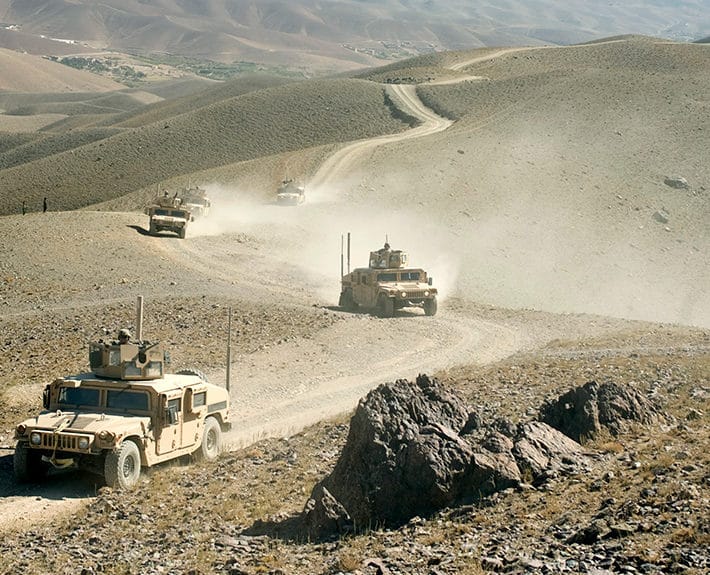
When a datasheet lists an MTBF (mean time between failure), that number did not come from running supplies until they failed. It came from a reliability prediction: a calculation that estimates a failure rate from the part types, their quality levels, how hard they are stressed, and the environment the equipment operates in. MIL-HDBK-217 is the classic methodology behind that calculation for military electronics.
MIL-HDBK-217, Reliability Prediction of Electronic Equipment, is a Department of Defense handbook of empirical models that estimate component and equipment failure rates in failures per million hours. The last published revision is MIL-HDBK-217F, Notice 2 (1995). It has not been updated since, so while it is still specified on many programs, it is widely regarded as dated for modern parts, and newer methodologies exist. This page explains what MIL-HDBK-217 predicts, why the operating environment changes the answer so much, and how Abbott applies it, including the modern 217Plus update, to its power products.
What MIL-HDBK-217 Is, and Is Not
Reading an MTBF correctly starts with knowing what a prediction is:
| MIL-HDBK-217 is | MIL-HDBK-217 is not |
|---|---|
| A standardized method to predict a failure rate and MTBF from the design and its environment. | A test. Nothing is run to failure; the number is calculated, not measured. |
| A tool for design trade-offs, comparison, and spares and maintenance planning. | A guarantee of field life. The predicted MTBF is a modeling result, not a warranty. |
| Only meaningful with its method, environment, and temperature stated alongside it. | A single comparable number on its own. Two MTBFs computed differently cannot be compared. |
| Invoked at the program and reliability-analysis level. | A qualification listed on a product line the way a test standard is. |
Two Ways to Run the Prediction
MIL-HDBK-217 provides two methods, used at different stages of a design:
| Method | When it is used | What it uses |
|---|---|---|
| Parts Count | Early design, before detailed stress data exists | Part quantities, quality grades, and the environment. A quicker, more conservative estimate. |
| Parts Stress | Detailed design, when the circuit and stresses are known | A per-part model: a base failure rate multiplied by factors for temperature, environment, quality, and electrical stress. More accurate and more work. |
Both reward derating, running semiconductors, capacitors, and magnetics well below their rated limits, because lower stress and temperature drive a lower predicted failure rate. That design margin is exactly what Abbott builds into its supplies.
Why the Operating Environment Changes the Number
The single biggest driver of a predicted MTBF, after the design itself, is the environment factor. The same supply is predicted to last far longer in a benign, climate-controlled rack than in a vehicle, a ship, or an aircraft, because vibration, temperature, and humidity all raise the modeled failure rate. MIL-HDBK-217 defines environment categories spanning benign to severe:
| Environment | Symbol | Where it applies |
|---|---|---|
| Ground, Benign | GB | Controlled, near-ideal conditions; the mildest environment and the highest predicted MTBF |
| Ground, Fixed | GF | Fixed installations with some environmental exposure |
| Ground, Mobile | GM | Vehicles and transportable equipment, with vibration and shock |
| Naval, Sheltered | NS | Below-deck shipboard equipment |
| Naval, Unsheltered | NU | Exposed shipboard equipment |
| Airborne, Inhabited | AIC / AIF | Crewed aircraft compartments (cargo or fighter) |
| Airborne, Uninhabited | AUC / AUF | Harsher, uncrewed aircraft locations (cargo or fighter) |
| Missile and cannon launch | MF / ML / CL | The most severe environments, dominated by extreme shock and vibration |
Why the environment dominates: the same supply, unchanged, can be predicted to last several times longer in a ground-benign environment than in a naval-sheltered, ground-mobile, or airborne one, purely because vibration, temperature, and humidity raise the modeled failure rate. That is why an MTBF is only meaningful when the method, the environment, and the temperature are stated with it, and why comparing two suppliers’ MTBF numbers is valid only when all three match.
MIL-HDBK-217F and 217Plus
MIL-HDBK-217F Notice 2 dates from 1995, and its component models predate most modern parts and manufacturing. Because of that, some programs specify newer methodologies. Abbott commonly works to two:
- MIL-HDBK-217F Notice 2, the classic and most widely recognized method, still called out by many programs and useful for consistency with legacy reliability baselines.
- 217Plus:2015, a modernized reliability-prediction methodology that updates the component models and adds process-grading factors for design, manufacturing, and operation. Those who use it generally regard it as a better reflection of modern component manufacturing than the older handbook.
Abbott can run a prediction to either method, whichever a program specifies. Other approaches, such as Telcordia SR-332 or physics-of-failure analysis, are also in use across the industry; the right choice is the one your program requires, and stating it alongside the number is what makes the result meaningful.
How MIL-HDBK-217 Relates to Abbott Products
Abbott provides MTBF predictions for its power supplies, converters, transformer rectifier units, and magnetics when a program calls for them, always stated with the method, environment, and temperature so the number can be used correctly. The datasheet figures you see, for example naval-sheltered, ground-mobile, and ground-benign MTBFs, are predictions of this kind. Because the models reward derating and conservative thermal design, the margin Abbott builds into its hardware translates directly into a higher predicted reliability, which matters most on the long-life and sustainment programs Abbott supports.
A component-level advantage: a reliability prediction needs the full parts list and the electrical and thermal stress on each part. Because Abbott designs its power products down to the component level rather than integrating sealed third-party modules, we hold that data directly. That means we can produce a prediction in the method and format a program requires, whether MIL-HDBK-217F Notice 2, 217Plus:2015, or another, relatively easily. An integrator building from black-box commercial modules often cannot, because the internal part stresses are not theirs to see.
Reliability prediction sits alongside our AS9100 and ISO 9001 quality system and our configuration-control and obsolescence practices. Together they support programs that need power hardware to stay available and predictable for decades.
Need an MTBF prediction for your environment and temperature, to MIL-HDBK-217F or 217Plus:2015? Send us the method, environment, and operating conditions your program requires, and we will provide the prediction for the right Abbott supply, converter, or magnetic. Contact us or complete the power supply design form.